
Tennessee row crop growers are navigating a complex summer marketing window as they adapt to a shifting global agricultural landscape. After enduring two consecutive years in the red, local producers are seeking innovative ways to manage operational costs, protect crop yields, and find new value in alternative supply chains.
Row Crop Economics and Global Market Dynamics
Tennessee farmers are grappling with tight profit margins following consecutive unprofitable seasons. High production costs and fluctuating global commodity demand have squeezed bottom lines across the state, from the fertile bottomlands of West Tennessee to the rolling fields of the Middle region. To combat these pressures, growers are increasingly focusing on cost-reduction strategies and meticulous risk management.
For those looking to manage risk during these volatile market cycles, understanding broader regional challenges is essential. Many local producers are actively navigating weather pressures and input squeezes by optimizing fertilizer applications, re-evaluating crop rotations, and upgrading on-farm storage solutions to gain more marketing flexibility.
Diversifying Income: Biomass and Supply Chain Research
One potential avenue for long-term resilience is crop diversification and supply chain optimization. Recently, Genera and the University of Tennessee completed collaborative supply chain research focused on biomass and agricultural logistics. This research explores how dedicated energy crops can be seamlessly integrated into existing regional farming systems.
By establishing reliable supply chains for alternative crops, Tennessee farmers may eventually secure more stable, localized revenue streams that are less vulnerable to international grain market volatility. These supply chain improvements can also help regional logistics providers optimize truck and barge traffic along major transport corridors.
Biosecurity: New Tools Against Invasive Pests
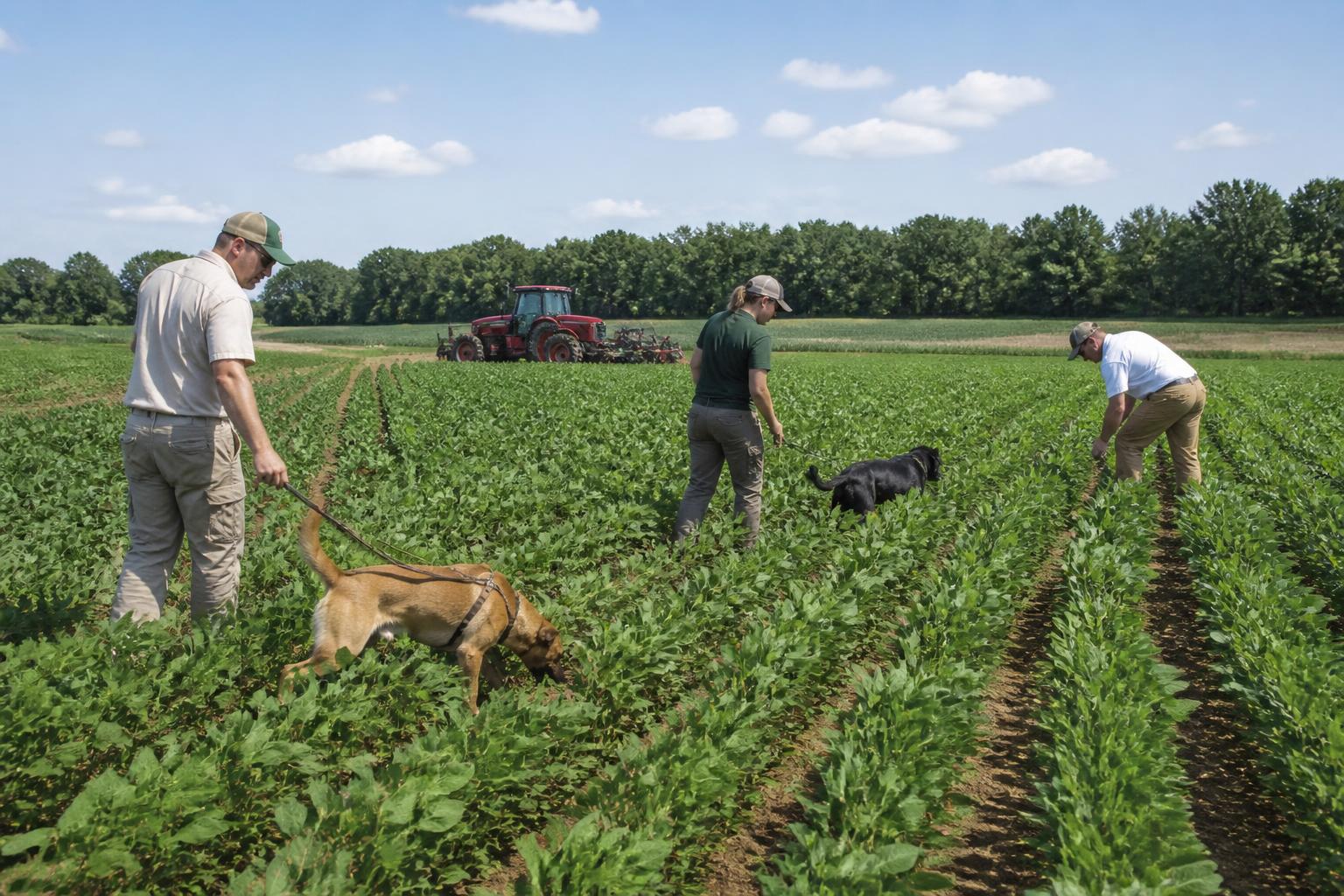
Protecting current crop yields from biological threats remains a top priority this summer. To support farmers, the state has deployed new detection dogs trained to sniff out invasive pests. These canine units provide an efficient, early-warning system to identify agricultural threats before they can cause widespread field damage.
Early detection is vital to maintaining local biosecurity and ensuring that Tennessee grain, oilseeds, and fiber crops remain highly competitive in both domestic and export markets.
Key Takeaways for Tennessee Producers
- Protect Margins: Focus on tight input management and realistic marketing targets to recover from recent unprofitable seasons.
- Explore Diversification: Stay informed on local biomass and supply chain innovations that could offer alternative revenue streams.
- Enhance Biosecurity: Leverage regional pest-monitoring programs and new detection tools to safeguard summer crop yields.
What it means for the market
The combination of tight financial margins, innovative logistics research, and proactive biosecurity highlights a transition phase for Tennessee agriculture. While global pressures keep commodity prices competitive, local agribusinesses and grain handlers are prioritizing efficiency. For participants looking to secure reliable local feedstocks, the ability to buy grain in Tennessee remains supported by a resilient network of producers focused on quality and modernized supply chain logistics.
Comments
No comments yet - be the first to share your take.