
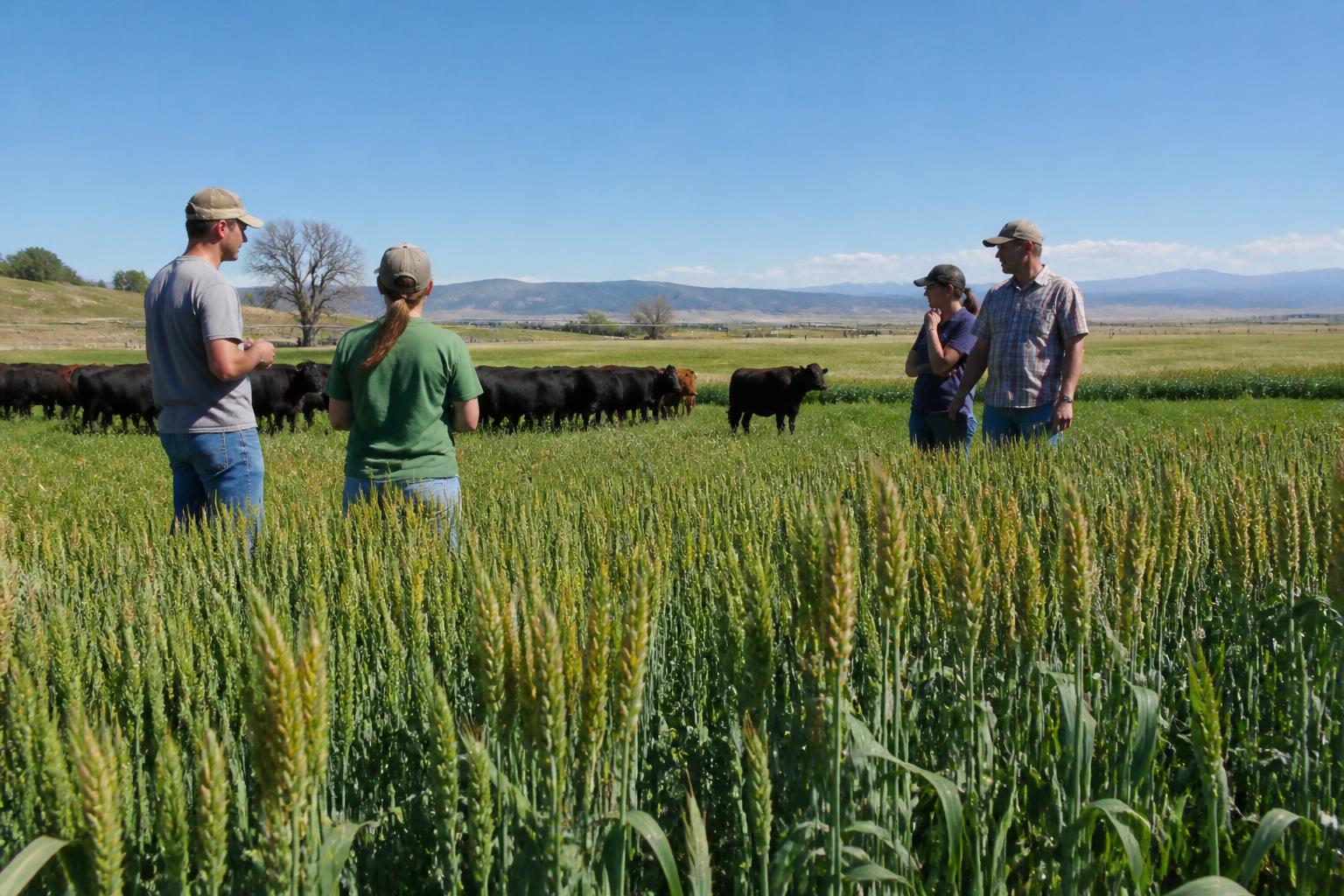
With summer conditions putting pressure on regional water resources and forage availability, Wyoming ag operators are focusing heavily on defensive management strategies. Market participants are looking beyond traditional practices to secure long-term viability, combining large-scale land protection agreements with modern cropping systems designed to withstand the arid climate of the Mountain West.
Massive Rangeland Easement Secures Critical Grazing Land
In a major development for the state's livestock sector, the Wyoming Stock Growers Land Trust and the Pathfinder Sand Creek Ranch have partnered to protect 17,757 acres of agricultural land. This massive conservation easement ensures that a significant tract of working rangeland remains dedicated to agricultural production, shielding it from development pressures and preserving critical wildlife habitat.
This partnership reflects a broader trend among Wyoming ranchers who are utilizing conservation agreements to maintain operational continuity. By securing working landscapes, producers can stabilize their grazing footprints even as land values fluctuate. For livestock operators looking at long-term herd rebuilding and resource stability, these initiatives targeting resource preservation and rangeland viability provide a critical buffer against fragmenting rangelands.
Climate-Resilient Cropping: Ancient Grains and New Forages Take Root
On the crop production side, researchers and growers are actively exploring alternatives to standard regional commodities. A recent study highlights the potential of ancient grains, which have shown promising adaptability to Wyoming's harsh growing environments. These grains offer an alternative market pathway for dryland farmers seeking to diversify their crop rotations without demanding excessive irrigation.
Furthermore, research from the University of Wyoming has confirmed a new forage crop specifically suited for southeastern Wyoming's distinct soil and moisture conditions. For regional livestock owners, integrating drought-resilient forage options is becoming essential to offset potential pasture deficits. Field days across the state are actively showcasing these drought-tolerant varieties, giving growers practical insights into maximizing water-use efficiency while maintaining high feed quality.
Market Adjustments: Sugar Beets and Conservation Incentives
As the summer progresses, crop conditions and economic shifts are also prompting conversations in other sectors. Wyoming sugar beet growers have recently addressed market pressures, pushing back on claims that weight-loss medications like Ozempic are the primary drivers behind sliding sugar prices. Instead, local agricultural advocates point toward broader market fundamentals and trade dynamics as the core factors influencing price volatility.
At the same time, conservation advocates are urging farmers throughout the region to adopt wider voluntary soil-health and water-saving measures. As national and local programs increasingly reward growers for climate-smart practices, adopting these measures is shifting from a purely environmental choice to a strategic economic decision that can lower input costs and open up new revenue streams.
Key Takeaways for Wyoming Producers
- Rangeland Protection: The 17,757-acre easement underpins the importance of proactive land trusts in keeping working ranches intact.
- Forage Innovation: University of Wyoming trials confirm specialized forage crops can provide reliable feed in drier southeastern counties.
- Crop Diversification: Ancient grains represent a viable market alternative for dryland operations aiming to reduce water dependency.
- Price Resilience: Sugar beet producers remain focused on fundamental market drivers rather than speculative consumer trends to navigate pricing shifts.
What it means for the market
The combination of large-scale land preservation and climate-resilient agronomics suggests that Wyoming's agricultural economy is preparing for a drier, more volatile future. For land buyers and input suppliers, this shift highlights the rising value of drought-resilient seed varieties and conservation-friendly management plans. Going forward, the integration of protected working lands and adaptive crop choices will likely dictate credit access, land valuation, and regional feed security across the state.
Comments
No comments yet - be the first to share your take.