
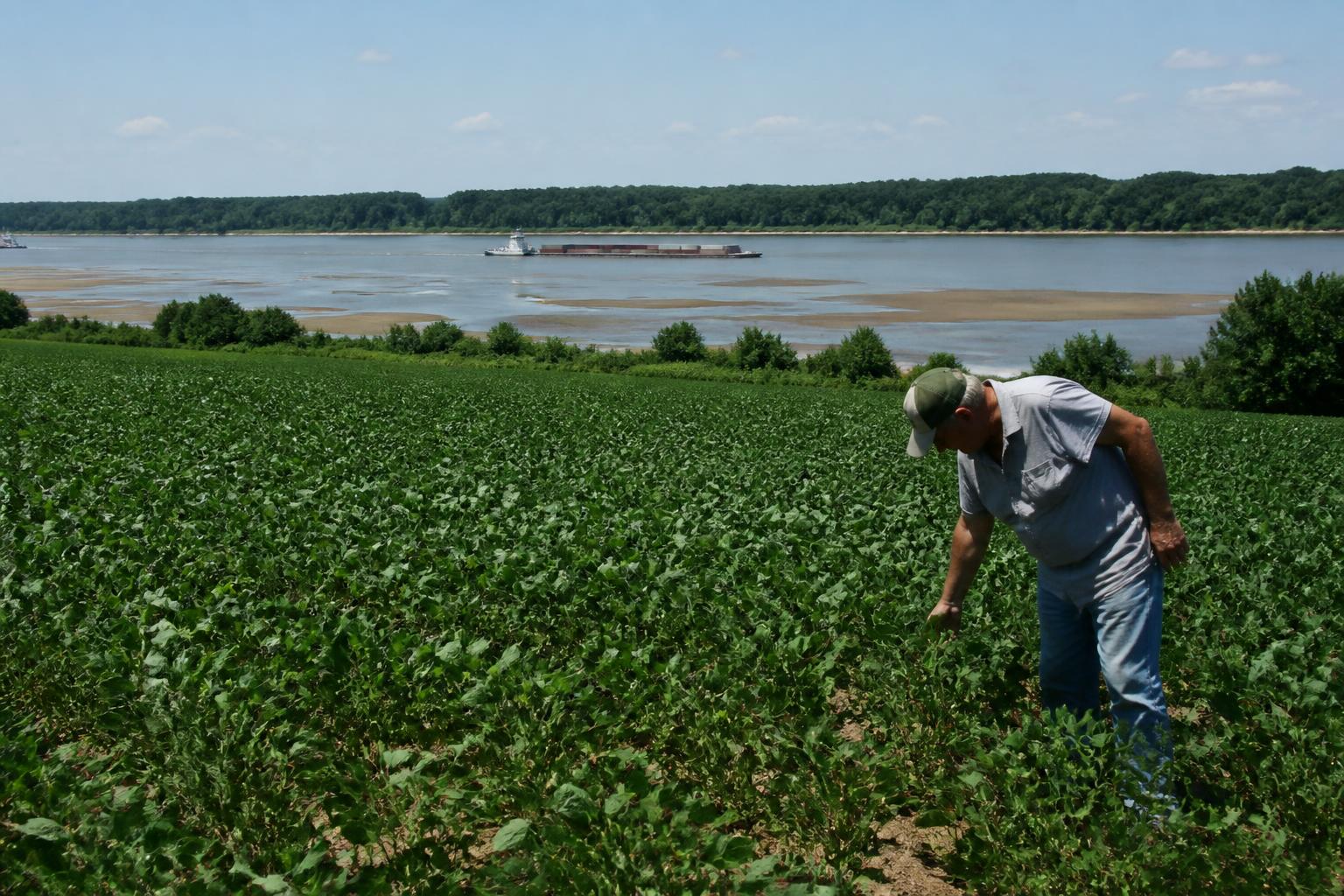
Mississippi grain growers and elevators are facing a complex shipping landscape this summer. As the Mississippi River experiences severe low-water levels, notably breaking historic low records at Memphis, traditional river-barge transportation has become increasingly constrained. With barge draft limits reduced and tow sizes restricted, freight rates have spiked, forcing agribusinesses across the state to re-evaluate their logistical strategies.
For the Mississippi Delta, which relies heavily on cost-effective river transit to move commodities to export terminals, these shipping disruptions are squeezing local basis. Crop handlers are actively exploring alternative shipping corridors to keep grain moving efficiently before fall harvest pressure mounts.
River Bottlenecks and Soaring Freight Costs
The Mississippi River is the lifeblood of agricultural exports for the Delta region, but extreme shallow waters are choking off normal operations. When river levels hit record lows, barge operators must significantly reduce the volume of grain loaded onto each vessel to prevent grounding. This reduced capacity, combined with a slower transit pace, has driven barging rates to near-record territory.
For grain elevators along the river corridor, this translates directly to wider basis levels and localized pressure on cash prices. Growers near key shipping hubs must navigate these fluctuating local bids while trying to secure transport commitments during a highly volatile shipping window.
The Trucking Alternative: Costs and Capacity
With river channels restricted, the agricultural logistics sector is looking closer at over-the-road freight. Trucking has increasingly become a viable alternative to bypass river bottlenecks, moving grain directly to domestic processors or deeper-water southern ports. However, transitioning bulk grain from barges to trucks presents its own set of challenges.
Trucking capacity is often tight during the peak summer season, and moving high-volume grain over long highway corridors can quickly erode profit margins compared to traditional bulk river transport. Despite the higher cost per bushel, trucking offers a level of reliability and speed that restricted waterways currently cannot match.
Shifting Logistics and Regional Infrastructure
The broader transportation landscape in Mississippi is also experiencing adjustments. For example, recent federal truck weight limit changes aimed at supporting other heavy local industries, such as forestry, highlight how transportation policy and infrastructure must adapt to shifting economic demands. While these specific weight changes target timber corridors, they underscore the vital role that robust highway networks play when river transport falters. Delta farmers are paying close attention to road weight regulations, local bridge capacities, and carrier availability as they prepare to move their grain.
To offset these rising transport costs, producers must actively manage their localized pricing, which often requires a deeper understanding of managing basis fluctuations and river logistics in the Delta.
Key Takeaways
- Extreme low water levels, particularly near Memphis, have severely restricted Mississippi River barge drafts and tow sizes.
- High barge freight rates are pressuring local basis, forcing elevators to pass increased logistics costs down to growers.
- Trucking is emerging as a critical alternative to bypass river bottlenecks, though limited by driver availability and higher per-bushel costs.
- Infrastructure readiness and local weight limits remain crucial factors for over-the-road grain movement as transport dynamics shift.
What it means for the market
For Mississippi grain growers, the current logistical bottleneck means that local storage capacity and flexible transport agreements will be more valuable than ever. Agribusinesses should closely monitor river level forecasts, lock in freight commitments early, and explore diverse delivery points beyond the river terminals to protect their bottom lines during this challenging summer shipping season.
Comments
No comments yet - be the first to share your take.