
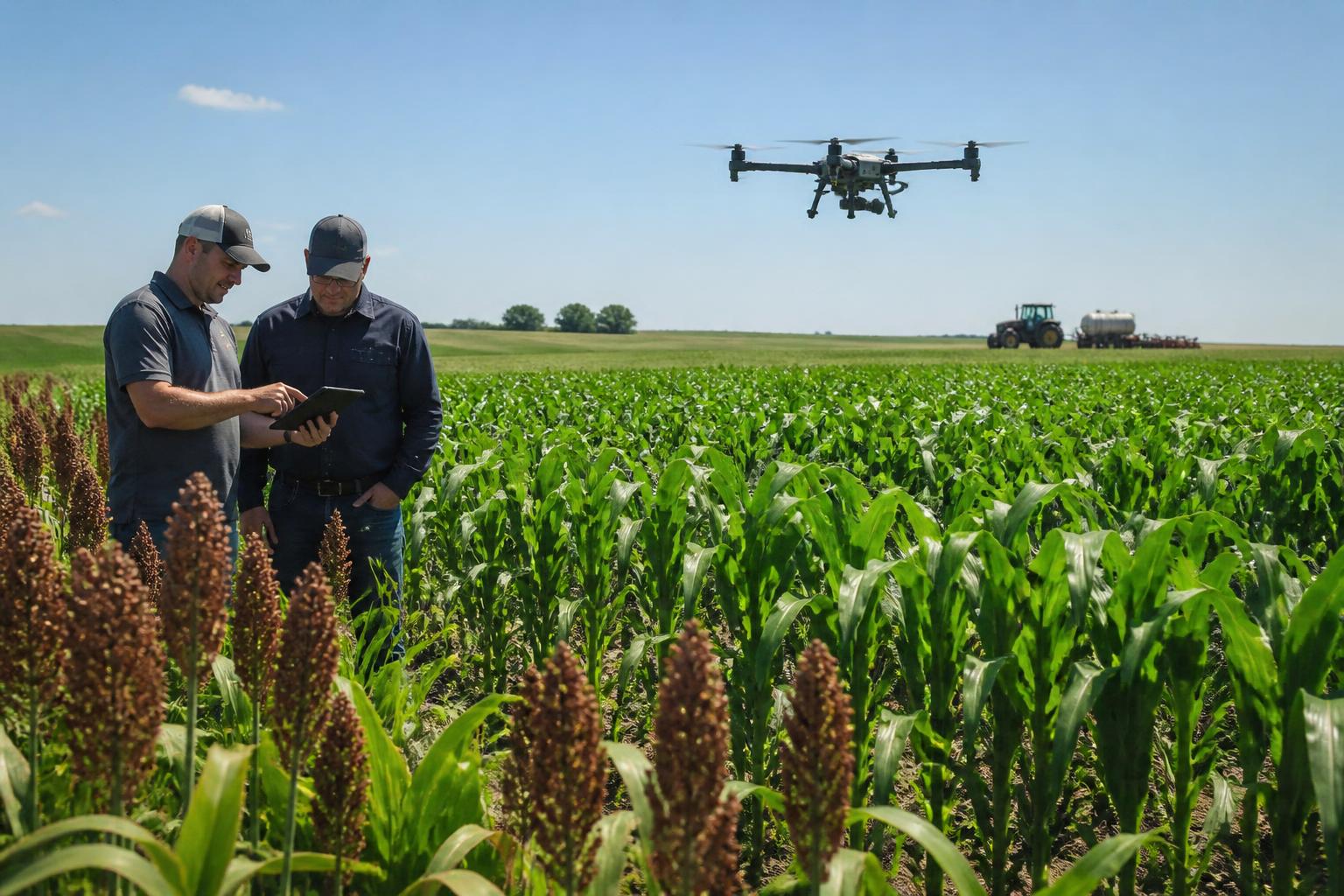
Mid-summer in Kansas brings a distinct set of challenges for growers as the heat intensifies. Current field reports indicate that producers are navigating rising disease pressure, specifically observing southern corn rust in central and eastern regions. This development requires careful scouting and timely management to protect yield potential as the crop progresses through critical growth stages.
For many Kansas operations, the focus has shifted toward balancing these immediate protection needs with long-term cost efficiency. With fertilizer demand remaining steady, farmers are increasingly looking toward innovative precision tools to optimize application rates. The integration of advanced robotics and AI-driven monitoring, supported by broader USDA research initiatives, is providing a pathway to reduce chemical inputs while maintaining effective disease control across diverse soil profiles.
Logistics and Resource Management
Infrastructure remains a critical component of the mid-summer strategy. Producers are keeping a close eye on regional grain logistics as they prepare for late-summer harvesting activities. While transport conditions fluctuate, the ability to move inputs effectively and store harvested commodities depends heavily on maintained rail and local elevator capacity. Navigating these regional bottlenecks is vital for minimizing downtime during high-activity periods.
Policy and Industry Developments
Beyond the field, the policy landscape continues to impact day-to-day operations. Concerns surrounding legislative shifts and the potential reorganization of USDA offices in Kansas City underscore the need for local businesses to remain agile. Whether dealing with regulatory questions or participating in federal programs, maintaining an awareness of how these institutional changes affect field-level crop protection is essential for stable, long-term planning.
What it means for the market
The convergence of elevated disease pressure and evolving logistics creates a complex environment for Kansas agribusinesses. Farmers who prioritize early detection of crop pathogens while leveraging precision technology to stretch their input budgets are likely to see better margins. Keeping a pulse on local transportation reliability and policy updates will be key to managing the operational risks inherent in this year’s summer cycle.
Comments
No comments yet - be the first to share your take.