
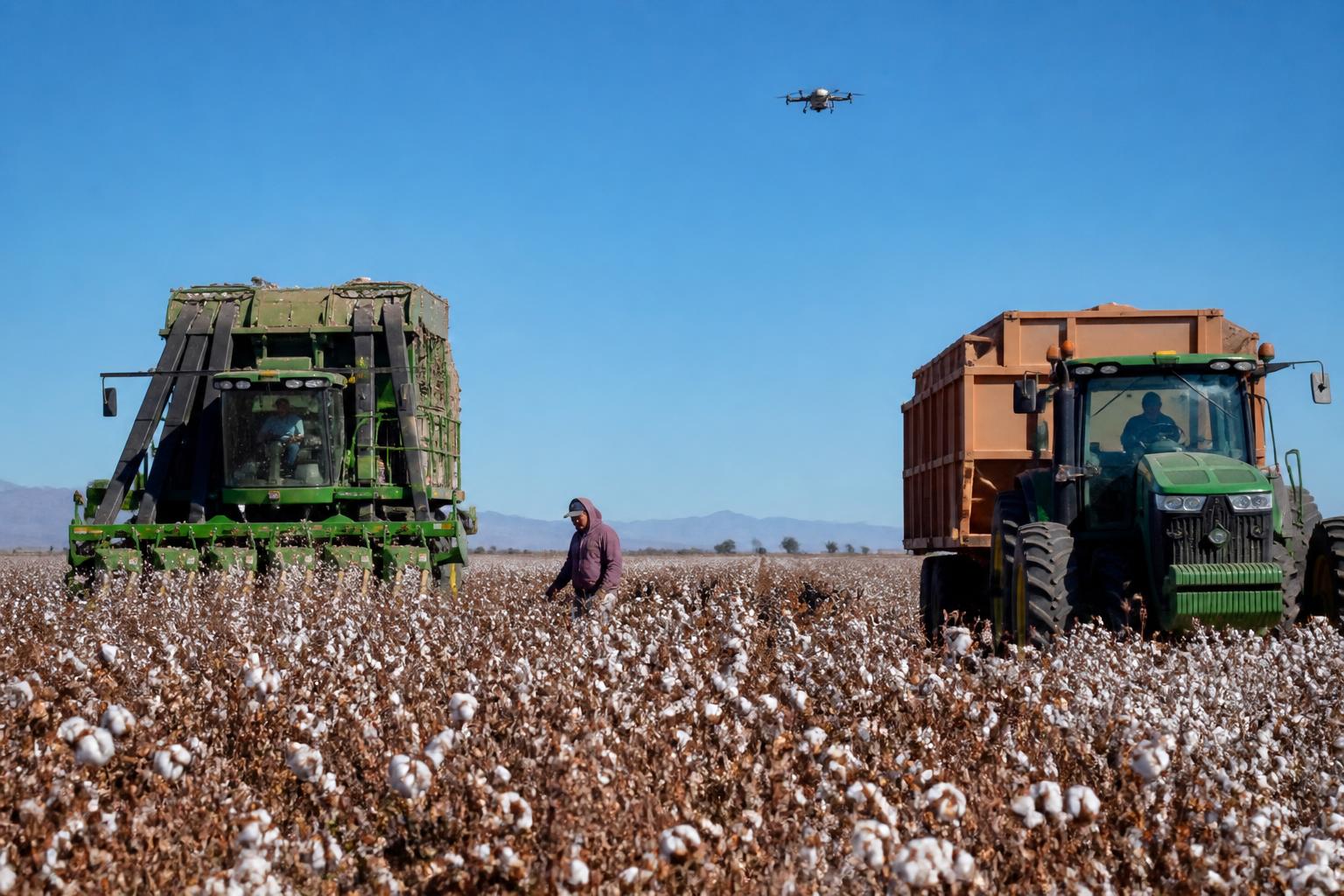
As we move into the fall season, Arizona growers are seeing encouraging signs in the fields. The latest industry data indicates a 4 percent increase in the state's upland cotton forecast, a welcome trend as producers prepare for harvest operations. This boost in production potential comes at a time when the sector remains focused on optimizing yield and long-term sustainability across the desert landscape.
Efficiency remains the central theme for regional producers as they balance these positive output numbers with ongoing environmental and logistical constraints. While harvest machinery begins to stage for the season, growers are looking closely at water availability, particularly in valley regions where groundwater management is a recurring concern. Managing these resources effectively is becoming as vital to profitability as the crop yield itself, as identified in our recent look at Arizona's evolving water and trade landscape.
Refining Operational Logistics
Beyond the farm gate, logistics continue to be a primary area of focus. Whether moving cotton, fiber, or fresh produce like leafy greens, the ability to transport goods reliably is essential. Farmers are increasingly adopting more targeted practices, including advanced pest control methods and precision technology, to keep input costs under control. These measures help shield operations from volatility in broader transport markets, where even small shifts in shipping conditions can impact the bottom line for regional agribusinesses.
As infrastructure needs evolve, many are keeping an eye on how localized transport hubs influence the flow of commodities. Developing a more resilient ag-tech infrastructure in key regions like Yuma remains a priority to ensure that the increased production volume does not hit bottlenecks during the busiest stretches of the fall season. This shift toward smarter logistics is essential for maintaining margins in an increasingly globalized market.
What it means for the market
For growers and handlers, the current environment demands a dual focus: maximizing the higher yield potential of this year’s cotton crop while simultaneously insulating the operation against water and transport risks. With harvest timing approaching, securing reliable freight capacity now may help avoid the seasonal premiums often seen when regional demand spikes. As producers continue to navigate navigating harvest pressures and broader market uncertainties, staying ahead of regional logistics trends remains the best strategy for protecting the season's gains.
Comments
No comments yet - be the first to share your take.