
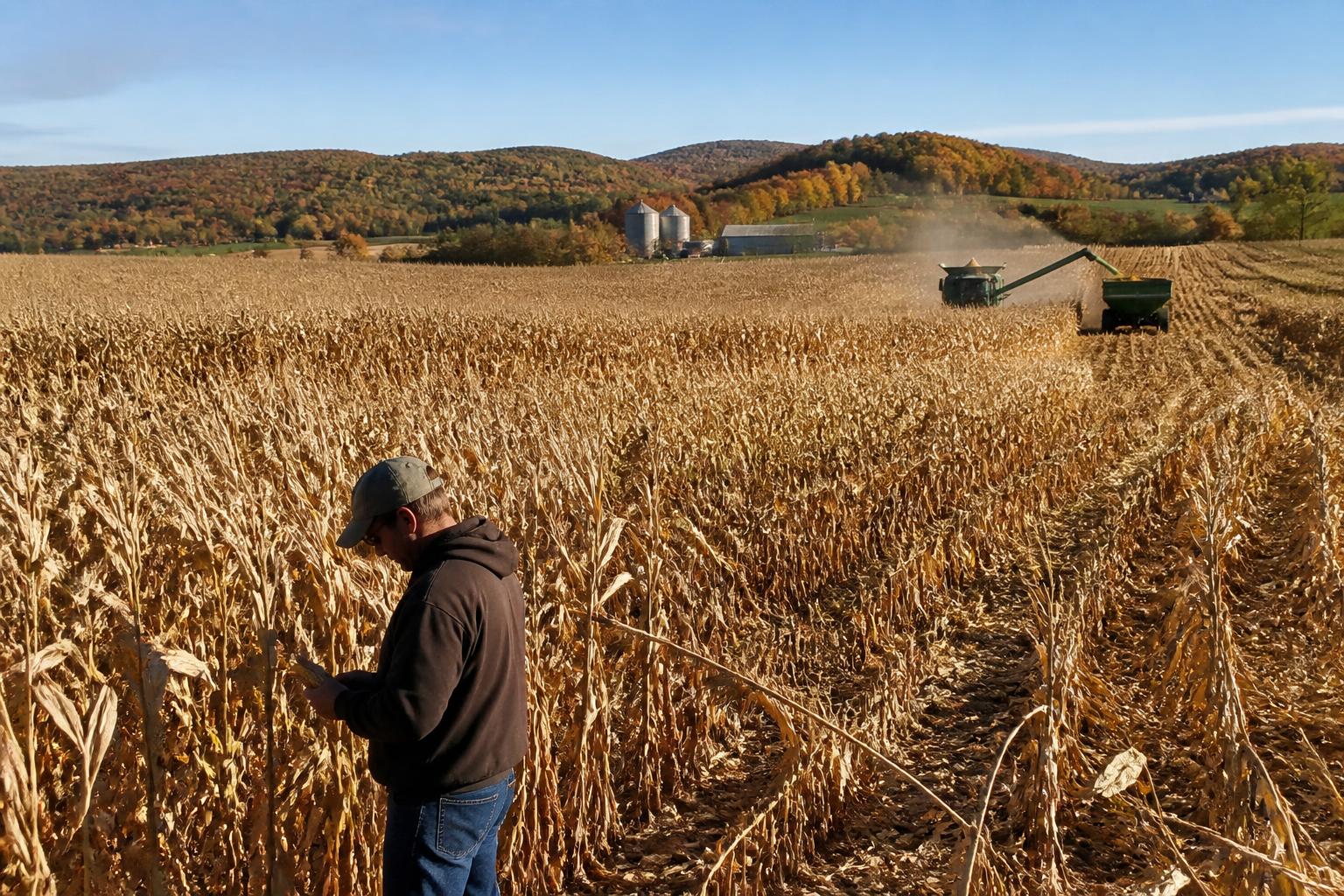
With the autumn harvest season in full swing across Virginia, growers are once again turning their attention to the critical balance between field efficiency and long-term financial security. Managing seasonal yield expectations against potential climate volatility remains a primary challenge for local operations, from the Shenandoah Valley to the Coastal Plain. As producers close out the 2026 cycle, there is growing interest in how data-driven approaches are refining the accuracy of crop insurance coverage, helping to tailor protections more closely to individual farm performance.
Integrating Precision Data into Protection Strategies
Accurate insurance rates depend heavily on reliable data. In many agricultural sectors, integrating historical field performance with modern sensor data is helping to streamline how policies are priced. For Virginia farmers, these advancements may mean more transparent premium structures that better reflect the actual risks associated with specific regional soil types and topography. By leveraging these improved methodologies, growers can often secure more stable coverage options that account for local, site-specific variances rather than relying solely on broader county-level averages.
Building Resilience Through Regional Infrastructure
Beyond individual insurance policies, the broader agricultural ecosystem in Virginia continues to evolve through improved logistics and storage solutions. As producers navigate the pressures of transporting this year's harvest to local elevators and processing facilities, the stability of the supply chain plays a direct role in risk mitigation. Aligning harvest schedules with regional infrastructure capacity is essential to protecting crop quality and ensuring that farmers can capitalize on market windows without facing the traditional bottleneck issues that can complicate peak season activity.
What it means for the market
For Virginia agribusinesses, the intersection of data-accurate insurance and robust local infrastructure provides a stronger foundation for operational planning. As we advance through October, growers who proactively review their coverage details against recent yield data and coordinate closely with logistics partners will be better positioned to manage the financial risks inherent in the current market environment. Staying informed on these trends is no longer just about protecting against loss, but about optimizing the entire production cycle for long-term sustainability.
Comments
No comments yet - be the first to share your take.