
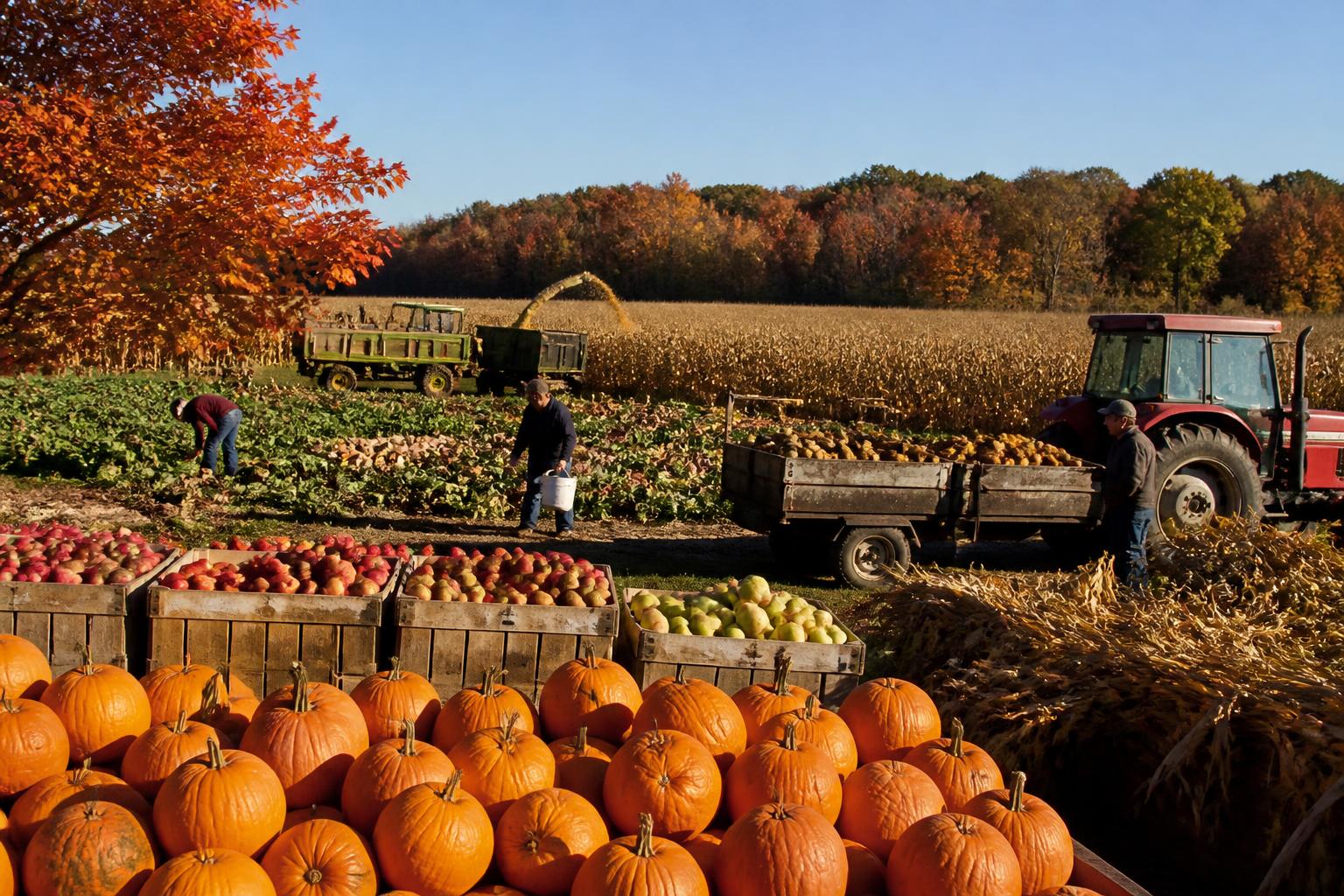
As the fall harvest progresses across Massachusetts, growers are increasingly focusing on the critical link between field production and final distribution. With the season drawing toward its conclusion, the ability to manage post-harvest logistics effectively remains a primary factor for producers looking to secure market access while minimizing waste.
For many local operations, the current period represents a race against time, as fluctuating temperatures and the typical onset of colder weather impact both crop quality and transport timelines. Managing these logistics nuances is essential for moving goods from regional farms to school programs and local hubs. Efficient handling at this stage helps producers maintain the integrity of their harvest in a market that is increasingly prioritizing farm-to-table initiatives.
Managing Storage and Market Access
Producers are balancing the need for rapid harvest with the realities of infrastructure gaps that can slow movement along state corridors. In parts of Massachusetts, the lack of robust transit options often forces farmers to invest in onsite storage or coordinate closely with regional grain and produce handlers to ensure product does not linger in compromised conditions. These strategic decisions are becoming central to the financial health of family-run farms.
Technology and the Future of Regional Distribution
Modern analytical tools and updated machinery, including newer loaders and specialized excavators, are providing some relief for labor-intensive handling. By integrating these systems, growers are finding ways to extend the utility of their facilities. Furthermore, as the industry explores new ways to support local food programs, the pressure on regional transportation networks likely will continue to demand innovative solutions for localized, efficient supply chain management.
What it means for the market
The immediate outlook for Massachusetts agriculture centers on the intersection of late-season efficiency and long-term storage planning. Farmers who successfully navigate regional infrastructure hurdles during this peak activity period are better positioned to participate in diverse market channels, including growing institutional partnerships. Moving forward, continued emphasis on logistics will likely prove as vital to bottom-line performance as the yields themselves.
Comments
No comments yet - be the first to share your take.