
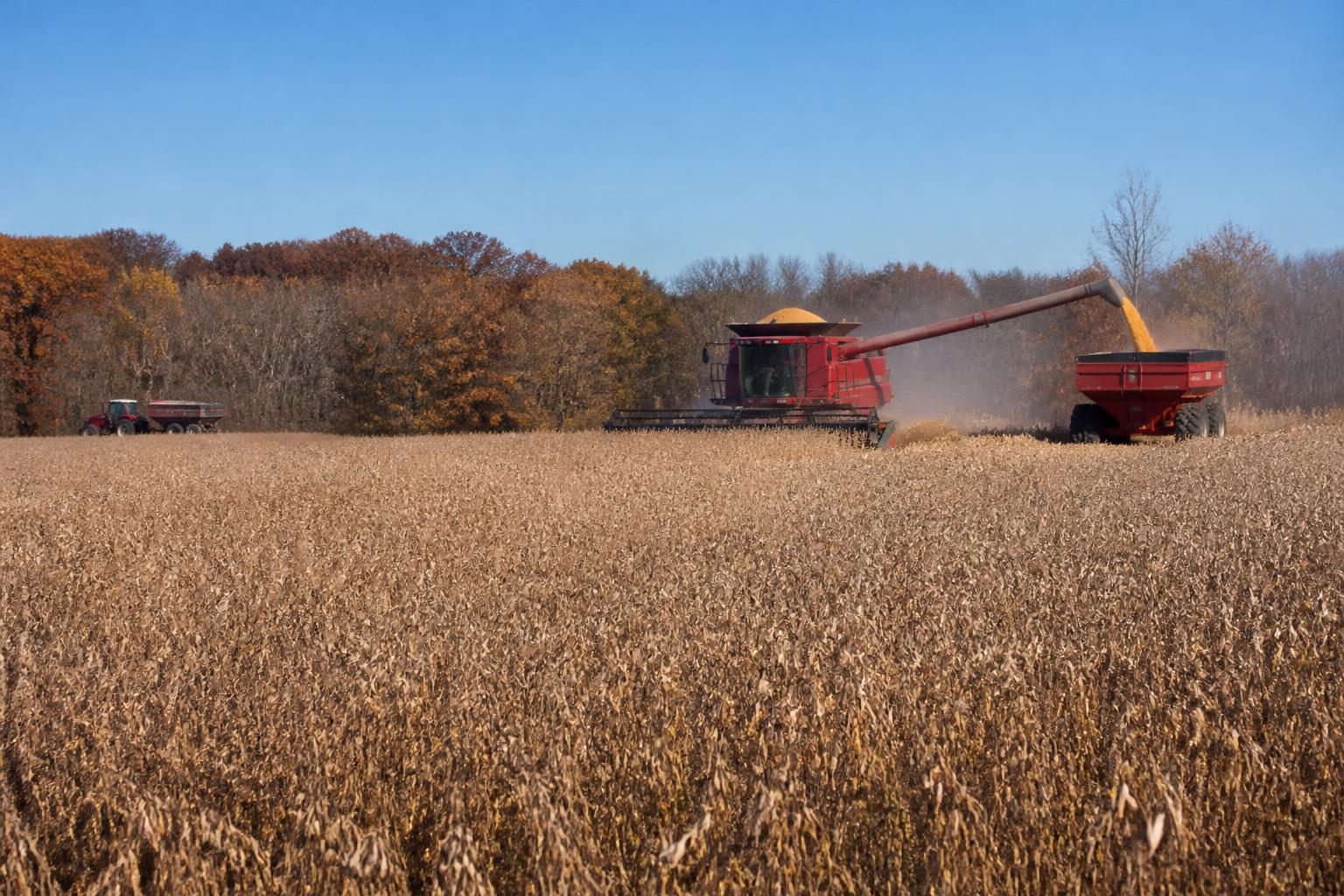
Missouri producers are currently working through a complex harvest season, with recent weather patterns playing a decisive role in both crop quality and field logistics. While earlier moisture provided a necessary boost to soybean and corn prospects across many counties, the resulting field conditions have introduced operational challenges for growers navigating wet soils. As harvest progresses, farmers are increasingly looking toward infrastructure adaptations to maintain flow from the field to local elevators.
Managing Field Risks and Storage Constraints
The intersection of tight financial margins and unpredictable weather has kept many Missouri operators focused on efficient storage management. With some areas experiencing delays due to excessive moisture, the ability to store grain on-farm has become a primary risk management tool. Farmers are increasingly utilizing grain bags and other flexible storage solutions to manage volume when local elevator capacity is under pressure or basis levels shift. Beyond storage, the late-season environment has renewed concerns over weed pressure and nutrient management, necessitating a proactive approach to crop protection as fields are cleared.
Looking Toward Input Strategy
As the season shifts, attention is turning toward next year's cost structures. With fertilizer pricing and supply availability remaining a significant point of concern in global markets, growers are scrutinizing their input strategies. Maintaining efficient application levels while anticipating potential supply chain volatility is becoming a standard feature of fall planning for Missouri agribusinesses. These regional efforts occur against a backdrop of broader national discussions regarding agricultural policy, where low commodity prices are increasingly cited as a driver for future legislative focus.
What it means for the market
For Missouri farmers and logistics providers, the current landscape demands high levels of adaptability. As fields dry and harvest pace potentially accelerates, tracking local spot basis and storage availability will be critical. The combination of, at times, difficult field conditions and cautious financial planning suggests a season where operational efficiency is the most effective safeguard against market volatility.
Comments
No comments yet - be the first to share your take.