
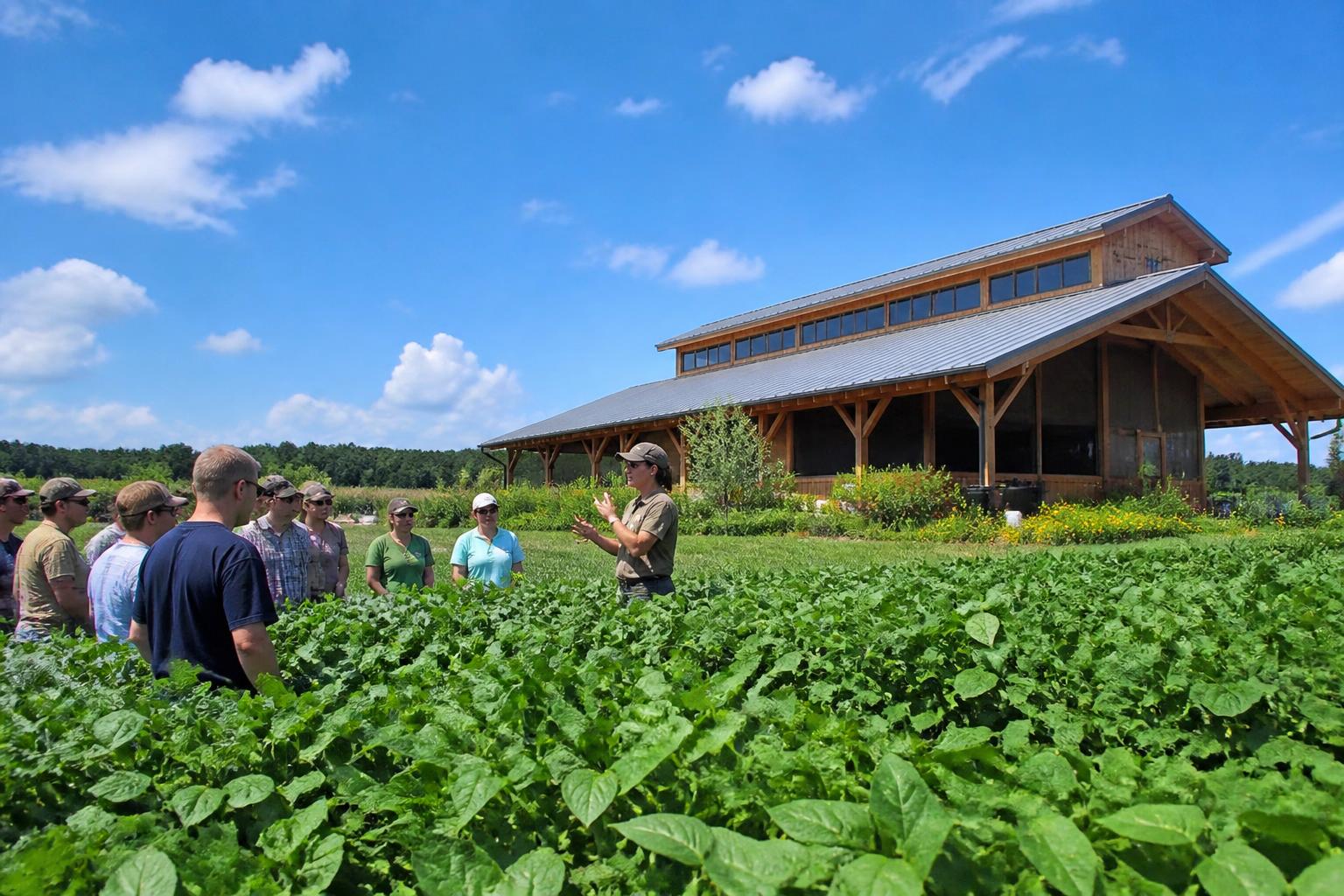
As the summer heat settles over Maine's diverse agricultural landscape, from the expansive fields of Aroostook County to the coastal specialty crop operations, producers are actively managing critical crop protection risks. Securing valuable yields this season requires a careful balance of legislative advocacy, soil conservation, and proactive pest and disease management.
For Maine's agricultural community, safeguarding crops goes beyond the immediate field level. It involves securing federal policy support, navigating environmental contamination challenges, and adopting progressive crop rotation and soil health practices to build long-term operational resilience.
Bipartisan Policy and Specialty Crop Safeguards
Specialty crops, including Maine's iconic wild blueberries and potatoes, face unique pest, disease, and weather risks that differ significantly from Midwestern row crops. To address these vulnerabilities, federal lawmakers, including Maine Senator Susan Collins alongside a colleague from Michigan, have teamed up to craft a bipartisan bill aimed at protecting Maine's specialty crops. This legislative action highlights the growing national recognition that specialty crop growers require tailored risk management tools and robust defense mechanisms against volatile environmental conditions.
Addressing Soil Health and Environmental Headwinds
Protecting the land itself remains a fundamental priority for local growers. While soil erosion is often observed during the late-winter thaw, its degrading effects on soil structure and nutrient retention carry directly into the active summer growing season. Implementing diverse cover crops and strategic conservation practices is proving essential, proving that soil health and protective cover cropping are not just for large-scale operations but are equally beneficial for smaller diversified farms across the state.
At the same time, Maine producers face complex environmental headwinds regarding forever chemicals. The U.S. Environmental Protection Agency (EPA) recently declared in a federal lawsuit that it has no obligation to regulate PFAS in biosolids. Furthermore, the agency has faced criticism for cutting millions of dollars in planned research funding dedicated to PFAS contamination in Maine, despite previously identifying it as a major priority. For local farmers, staying informed about soil testing and pursuing comprehensive summer crop protection and soil health strategies remains vital to mitigating these long-term environmental liabilities.
Combating Waste and Advancing Protection Strategies
Efficiency in the field directly correlates with the success of crop protection plans. A recent study highlighting food waste in Maine revealed that Aroostook County is the state's largest creator of farm-level food waste. Minimizing these losses starts with keeping plants healthy throughout the vegetative and reproductive stages, preventing disease-related spoilage before the harvest even begins.
To keep crops viable, forward-thinking operations are increasingly leveraging biological innovation and weather intelligence to target specific pests without degrading beneficial insect populations. Incorporating small grains into crop rotations and adopting advanced biological crop protection tools are becoming standard practices to interrupt pest cycles and protect fragile root systems during peak summer stress.
Key Takeaways for Maine Producers
- Advocacy is Key: Monitor the progress of new bipartisan specialty crop legislation which could introduce enhanced protection resources.
- Protect the Soil Foundation: Address lingering impacts of early-season erosion by assessing soil structure and planning post-harvest cover crops.
- Mitigate Environmental Risks: Keep a close eye on state-level soil and biosolid guidance as federal regulatory updates and PFAS research funding remain uncertain.
- Minimize Field Waste: Improve pest management and harvesting timelines, particularly in high-production areas like Aroostook County.
What it means for the market
For Maine's agriculture market, crop protection is transitioning from simple reactive pest control to a broader, more strategic model of risk management. As federal research funding shifts and legislative efforts attempt to close the gap for specialty crop protections, Maine producers must rely on robust local management practices. Investing in soil conservation, biological innovations, and efficient harvest logistics will be the differentiating factors that protect both regional yields and overall farm profitability this summer.
Comments
No comments yet - be the first to share your take.