
Fungal and Pest Pressures in Mississippi Fields
With high heat and moisture defining the mid-summer months, crop protection remains a primary focus for Mississippi producers. Soybeans and cotton across the Delta require constant scouting for insect feeding and fungal outbreaks. The heavy humidity can quickly fuel leaf spot and rust, prompting many growers to evaluate their chemical application intervals.
For some, optimizing chemical efficiency has meant rethinking double fungicide spray schedules in favor of single, well-timed applications. Making precise decisions on fungicide timing helps preserve margins while preventing the development of chemical resistance in local weed and pathogen populations.
Peanut Acreage Expansion Demands Specialized Protection
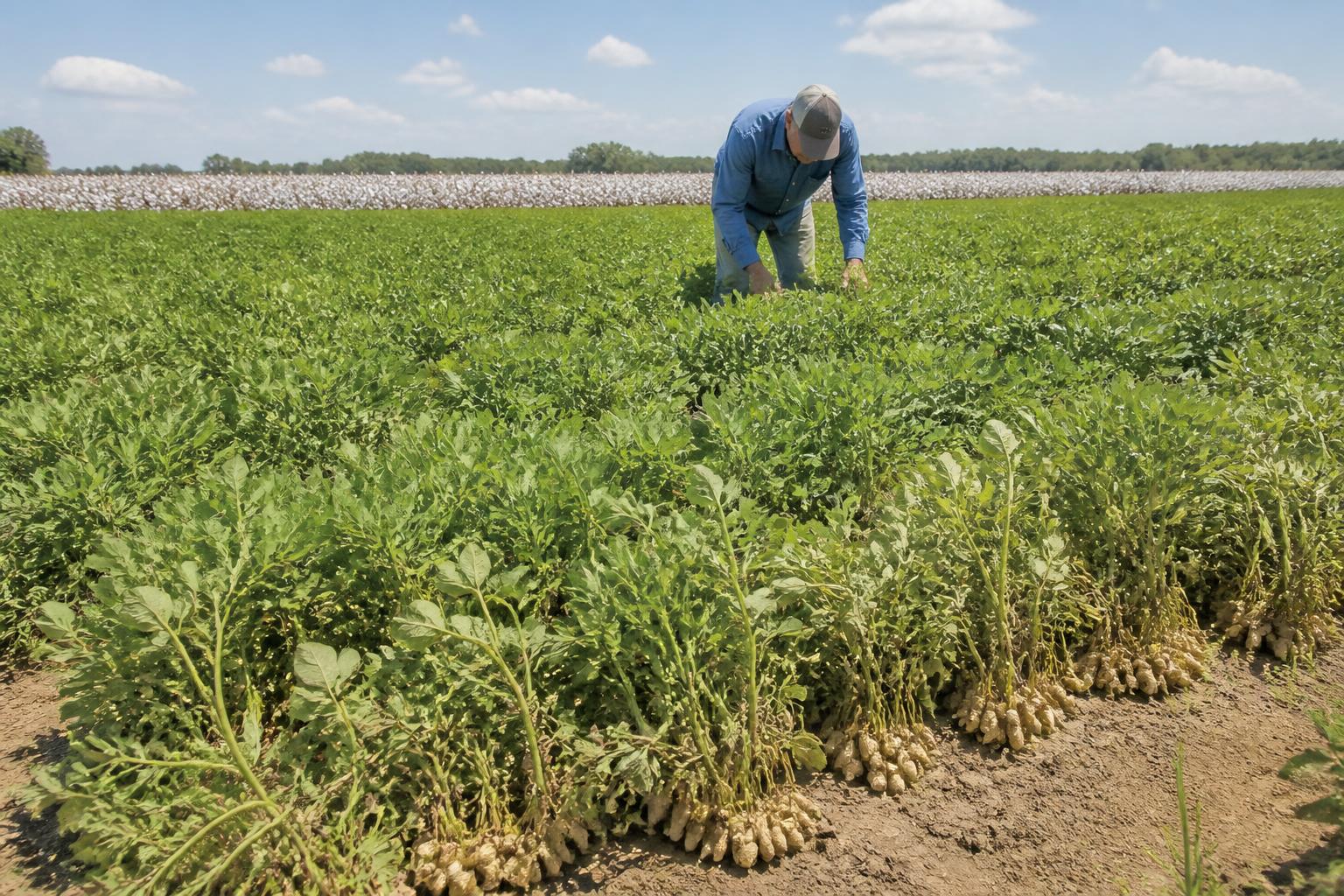
While cotton and soybeans remain Delta staples, peanut buyers see a bright future for peanut cultivation in Mississippi. Sandy soils in several regions of the state offer excellent conditions for peanut development. However, introducing or expanding this crop requires a shift in local crop protection strategies. Peanuts are highly sensitive to soil-borne pathogens and early and late leaf spot, which thrive in hot, humid southern summers.
Successfully growing peanuts in Mississippi requires a dedicated herbicide program to control tough weeds without injuring the crop, alongside a robust fungicide rotation. These agronomic shifts align with broader Mississippi summer grain field innovations that focus on targeted chemical applications and variable-rate technology to lower overall input requirements.
International Spotlight on Delta Cotton Management
The efficiency of Mississippi's crop management programs continues to draw global attention. Recently, a cotton tour brought Australian farmers to the Mississippi Delta to study local cultivation and pest control practices. Delta growers are recognized for their proactive approach to managing herbicide-resistant weeds and maintaining lint quality under challenging weather conditions.
To support these intensive management systems, farmers have benefited from minor relief in other input sectors. Recently, the market saw phosphate duty suspensions easing summer input pressures, which has allowed some agribusinesses to reallocate operating capital toward advanced crop protection chemicals and targeted pest control measures.
On the policy front, national appointments are also drawing attention from regional agriculture leaders. With news that Gregory Hawks is slated for a USDA post, local industry groups are watching for potential shifts in federal pesticide registration policies, conservation programs, and crop insurance frameworks that could impact how Mississippi farmers protect their fields in the future.
Key Takeaways for Mississippi Growers
- Diversification requires new chemistry: The expansion of peanut acreage across Mississippi requires growers to adapt to specialized herbicide and fungicide regimes.
- Timing over frequency: High humidity drives disease, but target-specific applications are proving more cost-effective than automatic, multi-spray programs.
- Input balance: Easing fertilizer tariff pressures has provided some financial breathing room to invest in premium crop protection products.
What it means for the market
For Mississippi growers, input buyers, and agricultural retailers, the mid-summer crop protection window is a critical test of management efficiency. As the state's crop portfolio broadens to include more peanuts alongside cotton and grain, chemical suppliers must adapt to localized demand for specialty fungicides and herbicides. Maintaining clean fields through July will be the deciding factor in harvesting high-yielding, high-quality crops this fall.
Comments
No comments yet - be the first to share your take.