
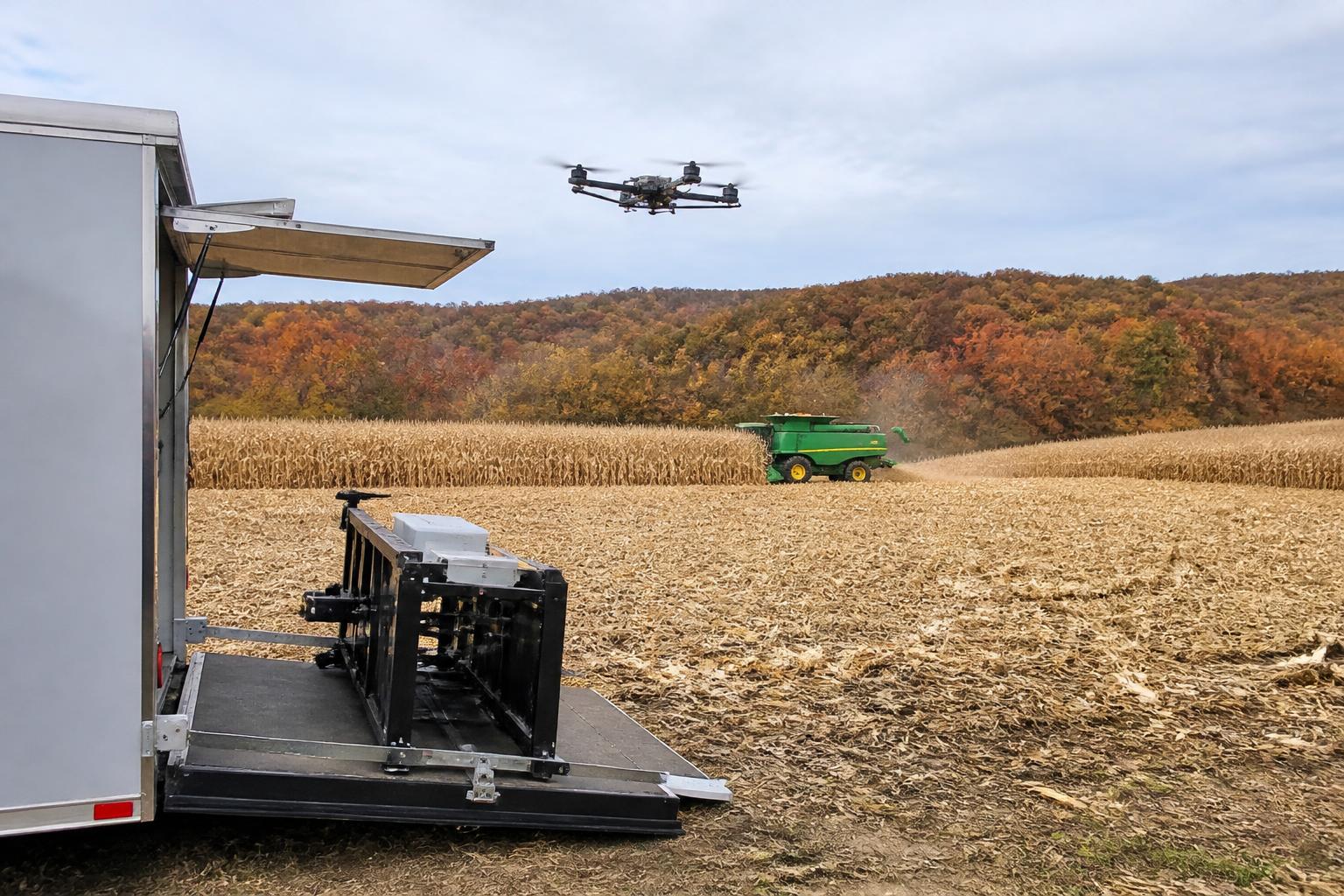
For Arizona growers and logistics operators, the push for increased efficiency remains a constant priority during the fall season. As harvest activities wrap up in some regions and winter preparations begin, interest in integrating smart technology into day-to-day operations is gaining momentum. The focus is shifting toward tools that can bridge the gap between labor availability and the need for precision management across expansive field acreage.
New mobile operations trailers designed to deploy and automatically recharge fleets of drones are beginning to surface in the broader agricultural discourse. These units aim to streamline the use of autonomous technology, potentially allowing for more frequent monitoring and data collection without requiring significant manual intervention. For operations in areas like the Yuma region or the central agricultural corridors, such advancements may represent a path to scaling precision ag services more effectively.
Scaling Precision through Automation
The introduction of mobile infrastructure, such as drone-tending trailers, addresses a common bottleneck in current agricultural technology adoption: the time and human effort required to maintain and deploy airborne assets. By automating the launch and recharge cycles, these systems may help producers capture high-resolution data more consistently. This is particularly relevant for managing large-scale crop health monitoring, which often requires a balance of timing and weather-dependent scheduling.
These developments align with a growing trend among ag-logistics stakeholders who are leveraging tech to streamline workflows and reduce operational friction. While such technologies are still in early stages for many, the potential for integration into existing field management plans is an area to watch as logistics providers look for ways to optimize every stage of the production cycle.
Logistical Considerations for Arizona Growers
Beyond the adoption of new hardware, maintaining stable logistics remains essential for the health of the state's agricultural economy. Whether navigating the complexities of border transit or managing the movement of goods through busy transport hubs, operators are constantly balancing new tech investments with foundational infrastructure needs. For a deeper look at managing transit, read more about managing seasonal transit pressures in our recent industry review.
Furthermore, as market demands evolve, understanding the broader regulatory and operational landscape is vital. Staying informed on navigating fall transit and regulatory pressures can provide a competitive edge for those moving perishable goods or bulk inputs during this busy time of year.
What it means for the market
The integration of autonomous drones and mobile support trailers signals a transition toward more automated, data-driven field management in Arizona. For farmers and agribusinesses, these tools could translate into tighter control over crop health and input usage. As these systems become more accessible, the key will be integrating them into existing labor-strapped operations without disrupting current seasonal logistics flows.
Comments
No comments yet - be the first to share your take.