
Adapting to Evolving Production Realities
As the summer growing season progresses, Arizona farmers are balancing the need for consistent yields with a rapidly changing operational environment. Recent shifts in land use, particularly in central Arizona, are influencing production cycles for key forage crops. Increased urbanization continues to exert pressure on alfalfa acreage, leading to tighter hay supplies and prompting many producers to re-evaluate their regional sourcing and consolidation strategies to maintain operational efficiency.
Pest Management and Technological Advancements
Integrated Pest Management remains a cornerstone of the desert agricultural strategy. Growers are closely monitoring insect-weed interactions and the prevalence of specific threats like Sclerotinia lettuce drop, which requires precise application management. The recent registration of new products, such as Bayer’s Velum One nematicide, provides producers with additional tools to mitigate soil-borne pressures in both Arizona and California production zones. These advancements are essential as the state works to refine its approach to desert agronomics and water-use efficiency during peak heat.
Diversification and Market Dynamics
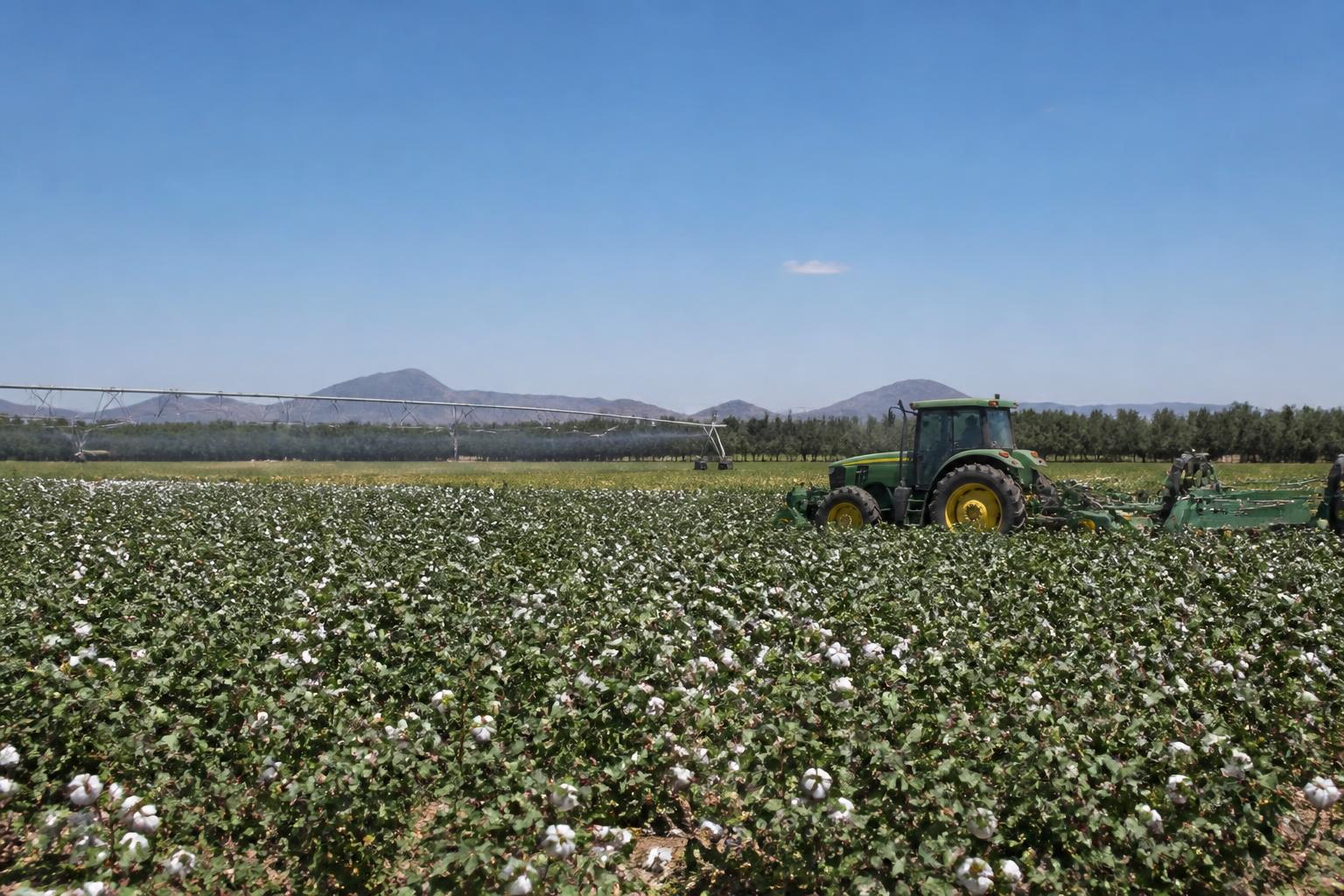
While some sectors face contraction, others are seeing expansion. Upland cotton, for example, has seen a notable increase in acreage across the state, signaling a pivot in crop selection for some farming operations. Furthermore, the high-value pistachio industry continues to demonstrate its significant economic footprint in the region. Maintaining this output requires consistent attention to labor and logistics coordination, especially during the high-demand summer months when heat mitigation for both crops and workers is critical.
What it means for the market
For agribusinesses and logistics providers, the current climate demands flexibility. Whether you are managing the transport of specialized inputs or coordinating harvest logistics, the consolidation of hay land and the introduction of new crop protection tools suggest that operational costs may remain fluid. Staying informed on regional pesticide guidelines and shifting acreage will be key for suppliers looking to support Arizona growers throughout the remainder of the season, particularly as the industry navigates persistent heat and market-wide logistics challenges.
Comments
No comments yet - be the first to share your take.